Planning a wilderness trip should feel exciting—not overwhelming. If you’re searching for a reliable trail campsite planning guide, you likely want clear, practical steps that help you choose the right location, prepare essential gear, and avoid common mistakes that can turn an outdoor adventure into a stressful experience. This article is designed to give you exactly that.
We break down campsite selection strategies, terrain assessment tips, weather considerations, and gear preparation essentials so you can plan with confidence. Whether you’re heading out for a weekend trek or a multi-day backcountry journey, you’ll find actionable guidance tailored to real-world outdoor conditions.
Our insights are built on extensive field research, hands-on trekking experience, and proven wilderness best practices. Every recommendation is grounded in safety standards and practical application—not guesswork.
By the end, you’ll have a clear, step-by-step approach to choosing and preparing the ideal campsite for your next trail adventure.
Mastering the Art of the Perfect Backcountry Campsite
When strategizing your itinerary for extended trails, it’s essential to consider how to harmonize your campsite locations with the unique challenges presented in extreme environments, such as those detailed in our Arctic Trekking Guide: Challenges of Polar Landscapes.
The difference between deep trail sleep and a long, shivery night often comes down to campsite selection. According to the Leave No Trace Center for Outdoor Ethics, improper site choice is one of the top causes of backcountry environmental damage. Moreover, a 2023 Appalachian Trail Conservancy report linked poor drainage assessment to over 40% of weather-related gear failures. In other words, where you pitch matters.
This trail campsite planning guide breaks it down step by step: evaluate terrain grade (a slight slope prevents pooling), check prevailing wind direction, and confirm distance from water sources (at least 200 feet, per federal guidelines). Ultimately, smart selection protects both you and the landscape.
Campsite Strategy: Planning Your Stops Before Lacing Your Boots
Great trips aren’t improvised at 7:45 p.m. when the light’s fading and everyone’s hungry. They’re mapped out long before you hit the trailhead.
Map Reconnaissance: Start Smart
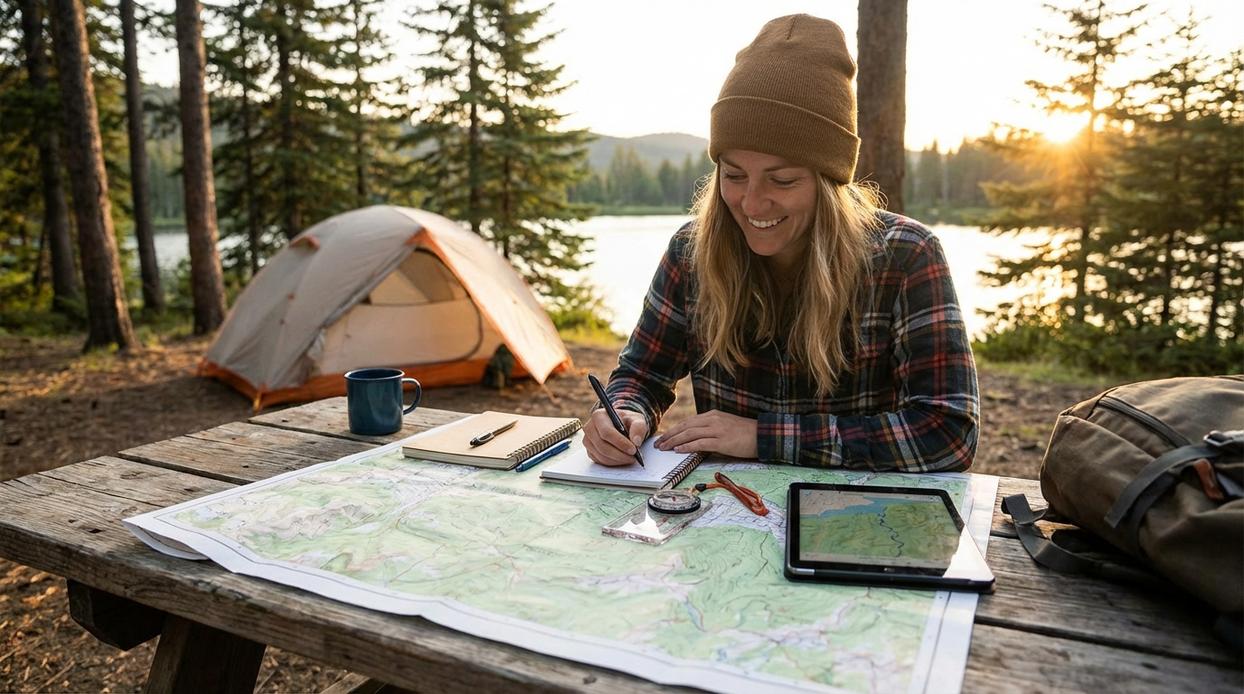
Topographic maps show elevation using contour lines—those squiggly lines that either mean “pleasant stroll” or “why did I do this?” Widely spaced lines signal flatter ground, which usually makes better camps. Digital tools like Gaia GPS and CalTopo layer in tree cover, slope angle, and water data, helping you flag potential zones in advance. Look for flat benches, natural windbreaks, and access routes that won’t require cliff-hopping at dusk. (Future you will be grateful.)
Water Is Non-Negotiable. Plan camps near reliable sources. Perennial streams—typically marked with solid blue lines—flow year-round, while seasonal sources may appear as dashed lines. Always identify a backup water option in case that “reliable” creek is dry. What’s next if both are low? Carry extra capacity or cache water beforehand.
Mileage, Terrain, and Timing matter more than ambition. A flat 10 miles differs wildly from 10 miles with 3,000 feet of gain. Steep grades, loose rock, and dense brush slow pace dramatically. Start scanning for sites at least an hour before sunset to avoid rushed decisions.
Permits and Regulations come first, not last. National Parks often require designated sites, while National Forests and BLM land may allow dispersed camping. Check land manager rules before finalizing your trail campsite planning guide.
Next step? Cross-check your plan against weather forecasts and seasonal hazards. Smart planning doesn’t end at the map—it evolves with conditions.
The On-the-Ground Checklist: 5 Factors for Your Home in the Wild
Setting up camp isn’t just about a pretty view. It’s about safety, sustainability, and smart decision-making. The Leave No Trace (LNT) principle—an outdoor ethic focused on minimizing environmental impact—starts with one rule: use established, durable surfaces and previously impacted sites whenever possible. In other words, don’t create a brand-new campsite just because it looks Instagram-worthy (your tent doesn’t need a hero shot).
Some argue that true wilderness exploration means forging your own path. However, repeatedly creating new sites damages soil, vegetation, and wildlife corridors. Established spots protect fragile ecosystems while saving you setup time. That’s a win-win.
The Five W’s of Site Selection
Water: Camp at least 200 feet from lakes or streams. This buffer protects riparian ecosystems—plant and animal communities around water—and reduces wildlife encounters. Close enough for convenience, far enough for responsibility.
Wind: Natural windbreaks like tree stands or rock outcroppings reduce heat loss and tent strain. Avoid ridgelines (high wind exposure) and valley bottoms where cold air pools. A sheltered site means better sleep and less gear stress.
Widowmakers: A “widowmaker” is a dead tree or hanging branch that could fall unexpectedly. Always look up before pitching your tent. It’s a simple step that prevents serious injury.
Wildlife: Avoid game trails and signs of animal activity. Set up your kitchen triangle—sleeping, cooking, and food storage areas—at least 100 yards apart to reduce scent attraction. Yes, even if you’re “just heating soup.”
Weather Hazards: Evaluate flash flood zones, lightning exposure, and avalanche terrain. Choosing higher ground in canyons or sheltered slopes in snow can be lifesaving.
For deeper preparation before multi-day trips, review how to build endurance for long distance nature treks: https://havajazon.com/how-to-build-endurance-for-long-distance-nature-treks/
Ultimately, this trail campsite planning guide isn’t about limiting adventure—it’s about protecting it for the next journey.
Beyond the Tent: Gear and Techniques for a Secure Night
Shelter orientation sounds technical, but it simply means how you position your tent. Face the door away from prevailing winds—the direction wind most often blows. In cold weather, angle it toward the morning sun for passive warmth. In hot conditions, chase afternoon shade. (Yes, your 6 a.m. self will thank you.)
The Bear-Safe Triangle clarifies wildlife safety. Imagine three points:
- Your sleeping area
- Your cooking spot
- Your food storage
Keep each roughly 200 feet apart. Store food in a bear canister or hung bag—never inside your tent. Cooking near where you sleep invites curious animals. (Bears have better noses than bloodhounds.)
The Ground Game is about insulation. Your pad’s R-value—a measure of thermal resistance—often matters more than your bag’s temperature rating because cold earth drains body heat. Clear small rocks, but don’t dig or trench; follow Leave No Trace.
For campsite etiquette, keep noise low and switch to red light, which preserves night vision and disturbs wildlife less. A simple trail campsite planning guide can help you map these zones before dusk. Sleep smarter, not just cozier. Preparation turns uncertainty into quiet, steady confidence at night.
Leaving It Better: The Mark of a True Adventurer
You now have the skills to choose safer, smarter campsites. A solid trail campsite planning guide doesn’t just help you sleep better—it protects the land that makes the adventure possible.
Start with the basics:
- Pack out everything you pack in, including food scraps (yes, even biodegradable ones—they attract wildlife and disrupt natural feeding patterns, according to Leave No Trace Center for Outdoor Ethics).
- Check for micro-trash before leaving: twist ties, tea bag tags, crumbs.
- Naturalize the area by gently fluffing matted grass and leaves.
Some hikers argue that a small impact “doesn’t really matter.” But multiply that by thousands of visitors each year, and minor damage becomes visible erosion, wildlife displacement, and contaminated water sources (National Park Service data).
Before hiking out, pause. Scan your site from different angles. Would someone know you were there?
That final sweep takes two minutes. The impact lasts for years.
Leave it better—or at least invisible.
Plan Your Next Adventure with Confidence
You set out looking for clarity on how to prepare smarter, safer, and more efficiently for your time outdoors—and now you have it. From choosing the right location to organizing essential gear and anticipating environmental challenges, you’re better equipped to make every trek smoother and more rewarding.
The biggest frustration for most adventurers isn’t the trail itself—it’s poor planning that leads to forgotten gear, unsafe campsites, or unnecessary stress. With the right preparation strategy, those problems disappear. A well-structured trail campsite planning guide transforms uncertainty into confidence and turns every outing into a memorable experience for the right reasons.
Now it’s time to put this into action. Review your upcoming trip, map out your campsite options, double-check your gear, and apply the strategies you’ve learned. Thousands of outdoor enthusiasts rely on our proven trekking insights and field-tested gear advice to avoid costly mistakes and elevate their wilderness experience.
Don’t leave your next adventure to chance. Start planning today, use the strategies outlined here, and step onto the trail knowing you’re fully prepared for whatever nature brings.