
When you head into the wild, your knife is more than just a tool—it’s your backup plan, your food prep station, and sometimes your first line of defense. If you’re searching for a reliable outdoor knife care guide, you likely want clear, practical steps to keep your blade sharp, rust-free, and ready for any terrain. This article is built to do exactly that.
We break down essential maintenance techniques, from proper cleaning after wet treks to sharpening strategies that extend blade life in rugged conditions. You’ll also learn how to store, transport, and inspect your knife to prevent avoidable damage during wilderness exploration.
Our guidance draws from seasoned trekkers, field-tested maintenance practices, and hands-on gear experience in varied climates and zones. The goal is simple: help you protect your investment, improve performance, and ensure your knife never fails when you need it most. Let’s make sure your blade is always trail-ready.
The Core Trio: A Step-by-Step Cleaning and Oiling Routine
By keeping your outdoor knives sharp and well-maintained, you not only enhance their performance for tasks like preparing food or crafting tools, but you also ensure that you’re equipped for safe navigation, especially when paired with smart technology like GPS, which can be a lifesaver in remote wilderness areas – for more details, check out our How GPS Navigation Works in Remote Wilderness Areas.
A good blade can last decades—but only if you treat it right. This outdoor knife care guide breaks the process into three simple steps you can follow anywhere.
Cleaning in the Field vs. At Home
In the field, your goal is DAMAGE CONTROL. Wipe the blade down after use, especially if you’ve cut food, rope, or anything acidic (looking at you, citrus). At home or base camp, do a deeper clean to remove hidden grit and moisture.
Some argue modern stainless steels are “basically rust-proof.” Not quite. Stainless means stain-resistant, not immune. Even premium steels corrode if neglected (Knife Steel Nerds, 2022).
Step 1: Removing Debris
Use:
- A soft cloth
- Warm water
- Mild soap
Gently scrub the blade and handle. For folding knives, PAY SPECIAL ATTENTION TO THE PIVOT AREA. Dirt loves to hide there, grinding away at smooth action like sand in a gearbox. A soft brush can help loosen buildup.
Step 2: Thorough Drying
Moisture is the PRIMARY ENEMY of most blade steels. Dry with a microfiber cloth, then use compressed air for tight spots—especially around pivots and locking mechanisms. Even a few trapped droplets can start corrosion within hours in humid conditions (ASM International).
Step 3: Applying a Protective Oil
For food prep knives, use food-safe mineral oil. For utility blades, apply a thin coat of protectants like FrogLube or Tuf-Glide. Less is more—wipe on, then buff off excess. You want protection, not a slippery mess.
Pro tip: Reapply oil after heavy use or wet conditions. Your blade will thank you (silently, but still).
Mastering the Edge: Sharpening for Peak Performance
Back in 2019, after three months of testing blades on weekend treks, I learned one humbling truth: a dull knife turns small camp tasks into survival drama. Understanding your bevel is step one. The primary bevel is the main angled grind forming the edge; the secondary bevel (also called a micro-bevel) is a smaller angle at the very tip that refines sharpness. Keeping a consistent angle—typically 15–20 degrees per side—matters because inconsistency creates a rounded, weak edge (and frustration). Consistency beats pressure every time.
Field Sharpening Tools
On the trail, pocket stones are lightweight and reliable but slower. Diamond rods cut fast and handle hard steels well (great when daylight’s fading). Pull-through sharpeners are convenient, yet critics argue they remove too much metal and can chew up fine edges. They’re not wrong—but for quick touch-ups before dinner prep, they’re practical.
At-Home Sharpening Systems
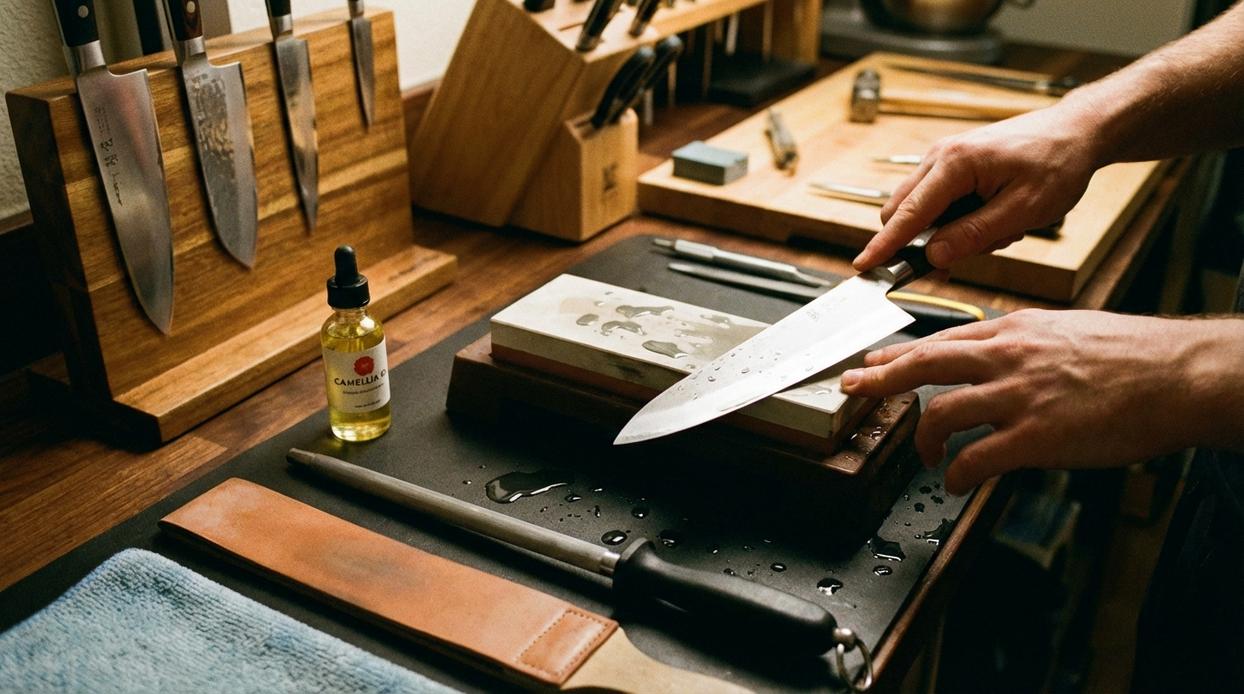
Whetstones—water or oil—offer control and tradition; guided systems like Lansky or KME help beginners lock angles precisely. Stropping polishes the edge to razor sharpness. Some say stropping is optional. After a year of side-by-side testing, I disagree—it’s the difference between “sharp” and “glides through rope like butter.”
The Burr
The burr is a tiny wire edge that forms when steel folds over during sharpening. Feel for it by lightly brushing your thumb perpendicular to the edge. Remove it by stropping: draw the blade spine-first along a leather belt or even cardboard, 10–15 passes per side.
For deeper techniques, consult an outdoor knife care guide and revisit your edge every few trips (steel forgets faster than you think).
Sheath Care: Protecting Your Blade’s First Line of Defense
Why Sheath Maintenance Matters
A quality sheath does more than hold your knife. It shields steel from rain, humidity, and trail grime, while protecting YOU from accidental cuts. When you maintain it, you extend blade life, preserve edge sharpness, and avoid costly replacements.
Leather Sheaths require cleaning with saddle soap and conditioning using mink oil or beeswax-based products. This prevents cracking, boosts WATER resistance, and keeps the fit snug. Think of it like boots: neglect them, and they fail when you need them most.
Kydex and Nylon Sheaths benefit from soap-and-water cleaning. Ensure the interior is free of grit that can scratch your blade, and check retention hardware for tightness. A quick inspection after each trip delivers LONG-TERM reliability.
For broader gear upkeep, see our tent care guide preventing mold and fabric damage. For a outdoor knife care guide, start here.
Advanced Care: Adapting to Blade Steel and Environment
Understanding blade steel starts with a simple trade-off. Carbon steel (a steel with higher carbon content, like 1095) is tough and typically easier to sharpen because its structure is less complex. The downside? It rusts faster without regular oiling. Stainless steel (like S30V, which contains chromium for corrosion resistance) fights rust better but can be harder to sharpen due to added carbides (hard particles that increase wear resistance).
Some argue stainless makes maintenance irrelevant. Not quite. Even stainless can corrode if neglected (yes, “stainless” is stain-less, not stain-proof).
In high-humidity or saltwater environments, clean and dry blades promptly. Use marine-grade protectants for added defense.
• Wipe down after coastal exposure
• Apply thin protective oil layer
Cold weather adds another twist. Condensation forms when a cold blade enters a warm tent—wipe and oil immediately.
Consistent care prevents costly damage. For step-by-step help, consult an outdoor knife care guide.
Keep Your Blade Ready for Every Horizon
You set out to learn how to protect your blade, extend its lifespan, and avoid the frustration of dull edges or unexpected rust in the field. Now you know exactly how proper cleaning, sharpening, storage, and routine maintenance keep your knife reliable when it matters most.
Neglecting your gear can turn a simple trek into a stressful situation. A dull or corroded blade doesn’t just slow you down — it compromises safety and performance when you’re deep in the wilderness. Consistent care is the difference between confidence and uncertainty on the trail.
Make maintenance part of your adventure routine. Revisit this outdoor knife care guide before and after every expedition, apply the steps consistently, and inspect your blade before packing it away. Small, regular actions prevent costly replacements and dangerous failures.
If you’re serious about dependable gear and stress-free exploration, start implementing these techniques today. Join thousands of outdoor enthusiasts who trust proven maintenance strategies to keep their equipment trail-ready. Don’t wait for rust or damage to force your hand — protect your blade now and head into your next journey fully prepared.