The great outdoors is entering a new era. Rapid advances in gear technology, shifting consumer values, and the realities of a changing climate are reshaping how we explore. What worked on the trail yesterday may not be enough for tomorrow’s adventures. In this guide to outdoor industry trends 2026, we look ahead to the forces redefining recreation—from smarter equipment and sustainable design to evolving destination choices and preparation strategies. You’ll gain a practical, forward-looking perspective to help you invest wisely, adapt confidently, and plan wilderness experiences that are safer, smarter, and more rewarding in the year ahead.
The Evolution of a Pack: Gear and Tech Redefined
The modern pack isn’t just lighter—it’s smarter, repairable, and increasingly alive (almost Groot-level alive, but more trail-ready). Three shifts are quietly redefining how serious trekkers prepare for the wild.
1. The Circular Gear Economy
First, the rise of the circular gear economy—a system where products are designed for repair, resale, and reuse rather than disposal. Brand-certified repair programs now rival warranties in importance, while peer-to-peer rental platforms turn idle gear into shared assets. Consequently, “gear maintenance literacy” is becoming a badge of honor.
Some critics argue repairs are inconvenient compared to buying new. However, extending a shell’s lifespan by even nine months can reduce its carbon footprint by up to 30% (European Environment Agency). More importantly, field repairs build self-reliance—arguably more valuable than shaving three ounces off your base weight.
Pro tip: Learn to patch technical fabrics and reapply seam sealant before your next expedition; it’s cheaper than replacing a $400 shell.
2. AI-Powered Navigation and Safety
Meanwhile, navigation has evolved beyond static GPS waypoints. Predictive AI trail systems now integrate weather feeds, terrain data, and user biometrics (like heart rate variability) to reroute in real time. In addition, personal locator beacons increasingly feature automated wellness checks that alert contacts if anomalies persist.
Skeptics warn this creates tech dependency. Fair point. Yet in regions impacted by shifting weather patterns—explored in how climate change is redefining popular trekking destinations—adaptive rerouting can be the difference between inconvenience and crisis. Notably, outdoor industry trends 2026 highlight AI-guided micro-adjustments as a leading safety innovation.
3. Hyper-Specialized, Sustainable Materials
Finally, materials science is leapfrogging “recycled polyester.” Bio-woven algae fibers and mycelium-based composites are emerging as lightweight, durable alternatives. PFC-free waterproofing (PFCs are persistent fluorinated chemicals linked to environmental harm, per EPA) now matches legacy treatments in performance tests.
While some argue bio-materials lack long-term durability data, early field trials show comparable abrasion resistance with significantly lower ecological impact. In short, the future pack isn’t just built for the trail—it’s built with the trail in mind.
Beyond the Summit: How We’ll Explore in 2026
Trend 4: The Rise of “Zonal Wilderness Exploration”
First, let’s clarify the term. Zonal Wilderness Exploration means committing to one national park, mountain range, or coastal region over multiple trips instead of hopping between international “bucket list” destinations. Think less whirlwind Euro tour, more season-by-season return to the same stretch of Yellowstone or the Scottish Highlands.
Why the shift? For one, travelers are recognizing the value of local fluency—understanding wildlife patterns, trail systems, and microclimates in depth. A hiker who visits Zion three times across different seasons gains insights no single weeklong trip can provide. Additionally, lower long-haul flight frequency reduces carbon impact (aviation accounts for about 2–3% of global CO₂ emissions, according to the IEA).
Some critics argue this sounds limiting. Why revisit the same place? Yet immersion often reveals more than novelty. (Anyone who’s rewatched a favorite film knows the second viewing hits differently.)
Trend 5: “Slow Adventure” and Skill-Building
Next, consider Slow Adventure. This approach prioritizes multi-day, low-impact travel over speed records or summit counts. Instead of racing to the top, participants focus on process-based exploration—learning advanced navigation, wilderness first aid, or ethical foraging along the way.
In practice, this might look like a five-day trek where two days are dedicated to map-and-compass mastery. Guided skill workshops are increasingly embedded into itineraries, aligning with broader outdoor industry trends 2026 that emphasize education over adrenaline.
Some purists claim adventure should remain raw and self-directed. However, structured skill-building increases safety and environmental stewardship (which benefits everyone on the trail).
Trend 6: The Digital Detox Mandate
Finally, there’s the paradox: as gear becomes smarter, trails are going offline. Digital Detox Mandates refer to designated low-connectivity zones marketed specifically for disconnection.
Outfitters now promote trips promising limited signal access—no constant notifications, no livestreamed summits. While skeptics argue connectivity enhances safety, many travelers report reduced stress and deeper presence when unplugged. (Turns out, the best signal bars might be birdsong.)
In 2026, exploration isn’t just about distance—it’s about depth.
A Greener Footprint: The New Era of Outdoor Stewardship
Trend 7: Carbon-Labeled Adventures
Imagine booking a backcountry trek the same way you compare calories on a menu. A carbon score—a quantified estimate of total greenhouse gas emissions per guest—will soon sit alongside trip difficulty and duration. This label factors in transportation logistics, food sourcing, energy use, and waste management. According to the UN World Tourism Organization, tourism accounts for roughly 8% of global emissions, pushing operators to rethink every mile traveled.
Some critics argue carbon labels oversimplify complex ecosystems (fair point). But transparency forces optimization: tighter shuttle routes, plant-forward meal plans, and reusable gear systems. The benefit? Lower-impact adventures without sacrificing experience. Pro tip: Choose itineraries that disclose emissions per person, not just per trip—it’s a clearer benchmark.
Trend 8: Regenerative Recreation
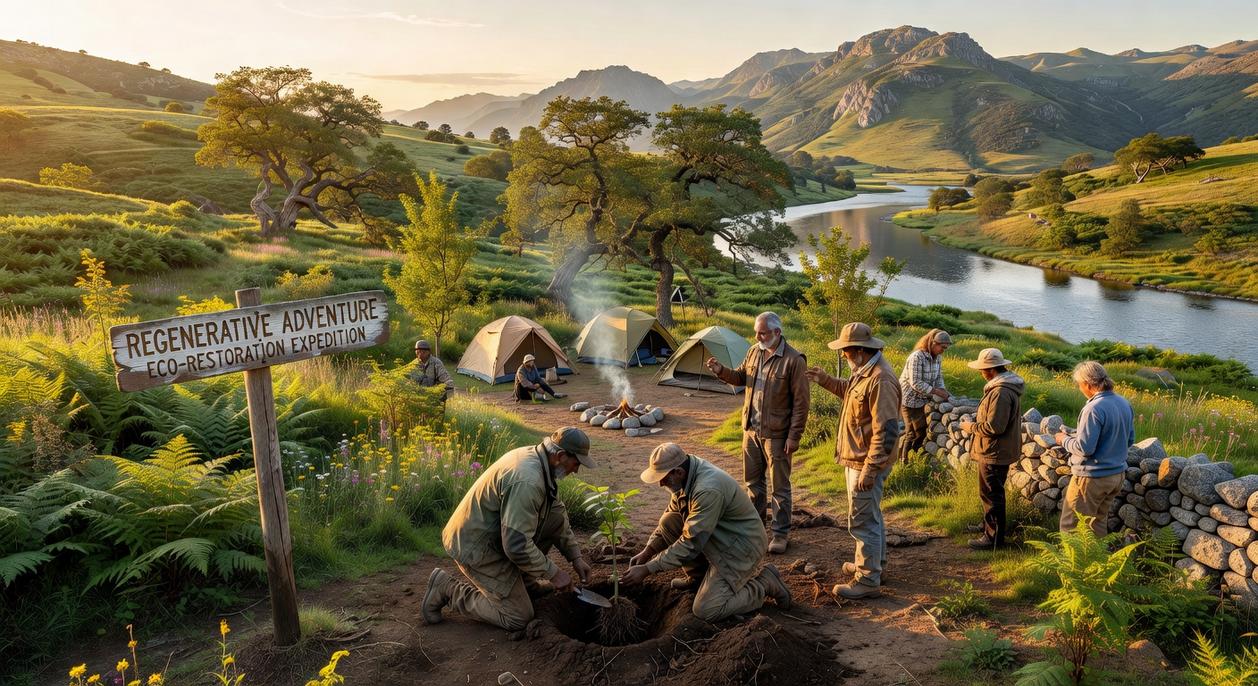
“Leave No Trace” is evolving into regenerative recreation—active restoration that improves landscapes during visits. Guided outings now integrate:
- Native tree planting
- Invasive species removal
- Trail repair and erosion control
This aligns with outdoor industry trends 2026, where participation equals stewardship. While some adventurers worry this feels like unpaid labor, many find deeper connection in hands-on care (think less spectator, more guardian). The payoff is tangible: healthier trails, stronger biodiversity, and a legacy that outlasts your footprints.
Your Trail Map for the Future
The outdoor industry trends 2026 make one thing clear: the future of the outdoors is smarter, more intentional, and rooted in conservation. Gear is becoming intelligent and sustainable. Adventures are shifting toward deep, zonal exploration. Impact is no longer an afterthought—it’s the priority.
You came here to understand what’s changing and how to prepare. Now you’re equipped to adapt, invest in future-proof gear, and build more meaningful connections in the wild.
Don’t get left behind with outdated equipment and surface-level trips. Audit your current gear for repairability today and plan your next adventure with purpose. Start now—and explore smarter, deeper, and more responsibly.