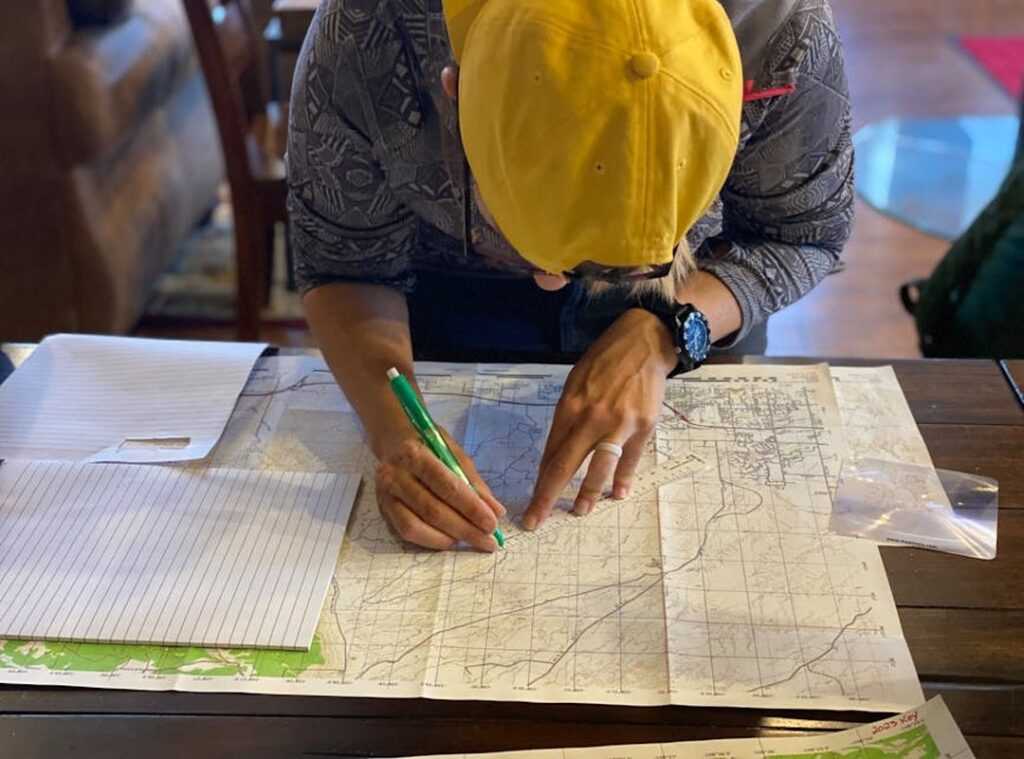
Ever felt that quiet panic when you suddenly don’t know which way is north? We all have. Getting lost in the backcountry is a fear that can grip anyone.
But here’s the thing: it doesn’t have to be that way. I’ve spent years honing my skills, navigating through both triumphs and blunders. So, trust me when I say I’ve got a solid grasp on route planning wilderness adventures.
You’ll learn a repeatable system that builds your confidence before you even step onto the trail. This isn’t just about maps and compasses. It’s about transforming navigation into a skill you can rely on without a hitch.
You’ll walk away with an actionable checklist, ready to turn anxiety into mastery. Ready to never feel lost again? Dive in and let’s get started.
Plan Before You Go: Trip Success Starts at Home
You know what’s worse than a soggy map? A dead phone in the middle of a storm. Yeah, your gear is shiny and new, but without a solid plan, it’s just extra weight.
Successful navigation is 90% planning and 10% (maybe less) execution. Anyone can carry a GPS device, but how many actually know their route if that gadget fails?
I’ve seen it time and again. Over-reliance on a single device like a phone can ruin a trip. You think, “It’s fine, I’ve got apps for everything.” But have you checked the weather?
Trail conditions? Do you have a physical backup? Most don’t.
And that’s when you’re lost in the wilderness, wishing you had.
Here’s a scenario for you: imagine your phone battery dies in an unexpected downpour. How does your plan hold up? If you’re scrambling, you’re not prepared.
A good plan isn’t just a map and compass. It’s knowing your terrain, having contingencies, and yes, some good old-fashioned paper maps.
When you plan well, there’s a psychological benefit too. Reduced anxiety is huge. You’re not constantly worried about getting lost.
You can actually enjoy the scenery. Imagine that! Better decision-making under pressure is another perk.
You think clearer when you’re not panicking.
So, before you step into the wild, get your planning right. This isn’t just about the journey. It’s about peace of mind (and not sleeping under a tree unexpectedly).
For more on planning and cultural takeaways in remote areas, check out cultural takeaways remote wilderness. You might find more than you expect.
The 5 Pillars of a Rock-Solid Navigation Plan
to the heart of route planning wilderness.
You’ve got to nail down these five steps.
1. Digital & Physical Route Study:
First up, let’s talk maps. Not just any maps. You need both digital tools like CalTopo or Gaia GPS and old-school physical maps. (Yes, those still exist!) Why?
Because elevation changes, water sources, key landmarks like creeks or ridges, and potential bailout points aren’t just pretty drawings. They’re your lifeline.
2. Tool & Skill Assessment:
Now, let’s be real. Can you confidently use a map and compass? If not, that’s something to fix before you even think about stepping out.
Choose your primary and backup tools based on your skills and the trip specifics. Maybe it’s a GPS device or a simple compass. Know your tools, know your limits.
3. Redundancy Rules:
Ever heard the saying “two is one, one is none”? It’s gospel here. Always have backups: a physical map and compass, a power bank for those electronic gadgets, and a basic GPS or satellite messenger.
It’s not paranoia. It’s smart planning.
4. The ‘What-If’ Game:
Imagine getting separated or losing the trail. Bad weather hits. What do you do?
Play the ‘what-if’ game before you leave. Brainstorm potential problems and write down simple protocols for each. It’s not about being a pessimist.
It’s about being prepared.
5. Share Your Plan:
Finally, don’t keep your plans to yourself. Share your detailed itinerary with someone reliable. Include your route, expected return time, and emergency contacts.
It’s the simplest insurance policy you’ll ever have.
And if you’re still scratching your head about wilderness navigation, check out this breakdown for some extra guidance.
Each step is key.
Don’t skip them.
Your life could depend on it.
Route planning wilderness isn’t a game. It’s serious, and it demands respect. With these pillars, you’re not just wandering into the wild.
You’re doing it with intention and with a plan that’s rock-solid. Every great adventure starts with a map, a plan, and the knowledge that you’ve got the skills to handle whatever comes your way. So, are you ready to tackle that wilderness?
Navigating With Style: Old Maps vs. Modern Tech
I’ve been out there, stumbling through trails (and probably cursing under my breath). So when it comes to route planning wilderness trips, choosing between classic maps and modern tech is a big deal. Let’s break it down.

First up, the trusty map and compass. These tools won’t let you down when the battery’s dead or there’s no signal. They build real skills, forcing you to understand your surroundings.
The downside? They’re not exactly user-friendly. You might need a course or two to get the hang of it, and yes, it’s slower.
For the right map, go for topographic (and waterproof). Ever tried to read a soggy map?
Now, on to GPS and smartphone apps. They’re fast, user-friendly, and track your every move in real-time. But they’re like that unreliable friend who’s always late.
If your battery dies or the screen freezes, you’re stuck. Plus, they might make you lazy. Who needs to read a map, right? (Wrong.)
Here’s my take. Don’t pick sides. Blend both.
Use apps for convenience but always carry that map and compass. Trust me, it’s your safety net for when tech fails. And when you’re out exploring hidden gems national parks, it’s smart to be prepared.
Having both tools ensures you’re covered. Technology is great until it isn’t. So, what do you think?
Got backup plans for tech fails?
Bringing It All Together: Crafting a Day-Hike Plan
You know, planning a hike sounds easy until you’re knee-deep in route planning wilderness (see what I did there?). But it can feel like a jigsaw puzzle. Let’s walk through a day-hike plan.
First off, pick your route name. For our fictional trek, let’s call it “Bear Creek Ridge.” You need a primary navigation tool. I use Gaia GPS on my phone.
It’s reliable, but I’ve learned the hard way to carry backups (phones die, tech fails). Grab Map #123 and a Suunto compass. Old-school methods never let you down.
At least, they haven’t let me down yet.
Now, key waypoints. Start at the trailhead, then the summit, and don’t forget the river crossing (important if you plan on staying dry). Mark these down.
Your bailout point? There’s a nifty spur trail at mile 3. Useful if things go sideways.
Before you leave, share your “left with” info. Tell a contact person your plan: where you’re going, when you’ll be back. Expected return time, say, 4 PM.
If you don’t check in by then, someone should know. (Pro tip: add an hour buffer for unexpected views.)
Are we ready now? Just hit the trail and enjoy.
Gear is Overrated, Confidence is Key
I’ve said it before, and I’ll say it again. Real confidence in the wild isn’t about the gear. It’s about being prepared.
If you’ve followed the 5-pillar system, you’ve already minimized the biggest risks. So why wait? Route planning wilderness is an adventure that starts now. Pull out a map.
Plan your next hike. The wilderness is calling, and you’re ready. Don’t just dream.
Live it. Your journey begins with the first step. Go explore.