
Planning a multi-day trek can feel overwhelming—especially when you’re trying to balance distance, terrain, weather patterns, resupply points, and gear weight all at once. If you’re searching for clear, practical guidance on multi-day hiking route planning, this article is designed to walk you through every critical step so you can hit the trail prepared and confident.
Many outdoor enthusiasts underestimate how quickly small planning mistakes can compound in the wilderness. From misjudging elevation gain to overlooking water sources, the details matter. Here, you’ll find structured strategies for mapping routes, assessing zonal terrain challenges, preparing for changing conditions, and maintaining your gear for extended trips.
Our guidance is grounded in proven backcountry practices, field-tested trekking strategies, and up-to-date outdoor safety standards. Whether you’re preparing for your first overnight hike or mapping out an ambitious multi-day wilderness expedition, this article will help you plan smarter, travel safer, and make the most of every mile.
From Dream to Trailhead
You feel it—the pull of a multi-day trek, the promise of ridgelines and quiet sunrises. Yet planning can feel overwhelming (gear lists alone can rival a short novel). The truth? A missing process keeps most aspiring backpackers home.
This guide distills trail-tested lessons into clear steps. I recommend starting with multi-day hiking route planning, then aligning fitness, food, and safety protocols around that choice.
Choose routes that match your current ability, not your Instagram aspirations.
- Map water sources and bailout points early.
Follow this framework, and you’ll step onto the trail confident, prepared, and excited.
Laying the Groundwork: How to Choose Your Perfect Route
Choosing the right trail starts with radical honesty. Assess your experience level: fitness, navigation skills (map and compass, not just GPS), and wilderness comfort. According to the American Hiking Society, most search-and-rescue incidents stem from hikers overestimating ability or underestimating terrain. If you’ve never managed steep elevation gain or backcountry camping, start shorter. Match the trail to your current capacity, not your ambition. (Summiting is optional; getting home safely isn’t.)
Next, define your trip’s vitals. How many days do you have? The average backpacker covers 8–12 miles per day, depending on elevation and pack weight, per National Park Service guidance. Time of year matters too—snowpack can linger into June in higher elevations, dramatically changing difficulty.
Researching your options is easier than ever. Online trail databases provide user trip reports, while printed guidebooks offer curated insights. Ranger stations supply real-time updates on weather, wildlife activity, and closures—often the most reliable source.
Then comes the permit puzzle. Many high-traffic routes require permits to prevent overuse; Yosemite, for example, caps wilderness entries daily. Apply early—some lotteries fill months in advance. Thoughtful multi-day hiking route planning ensures access, safety, and a far better experience.
Charting Your Course: Mastering Maps and Mileage
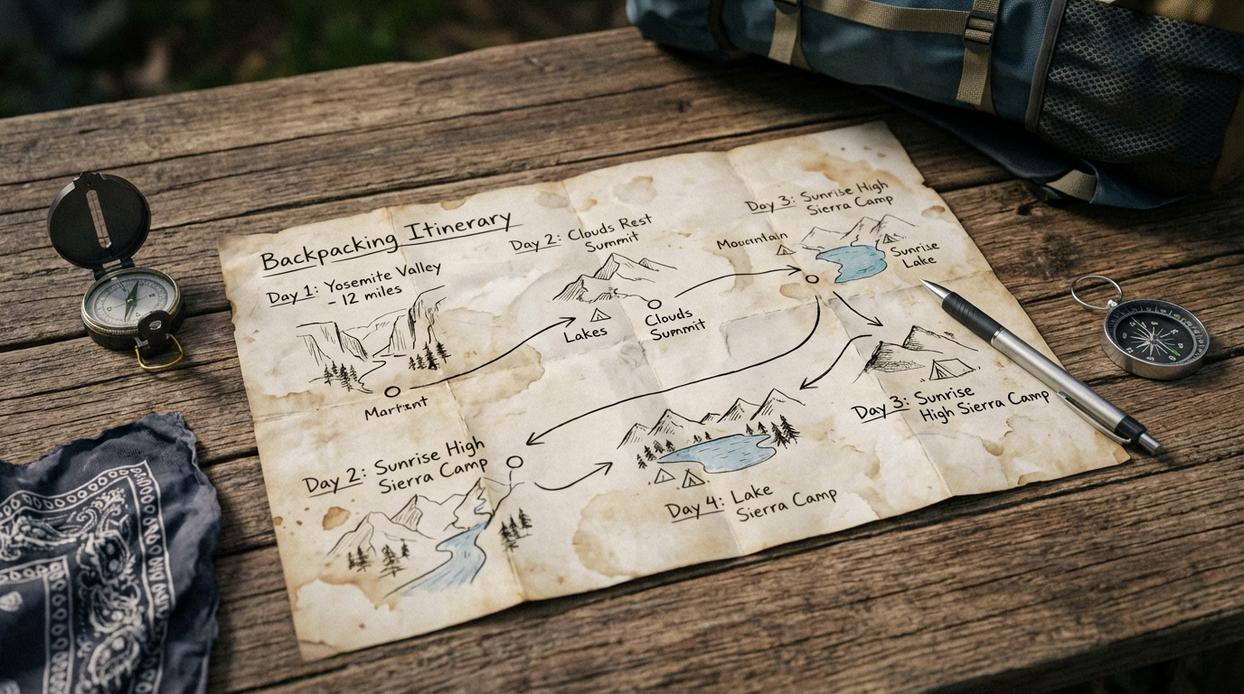
The difference between a stressful trek and a confident adventure often comes down to preparation. When you master your navigation and mileage planning, you gain control, conserve energy, and dramatically reduce risk (which means fewer “are we lost?” moments).
The Navigation Trinity
First, build redundancy into your system. Relying on one tool is tempting—after all, smartphones feel like magic. But batteries die, signals fade, and screens crack. The smart approach is the “trinity”: a physical topographic map (a detailed map showing elevation contours), a reliable compass, and a digital app like Gaia GPS or AllTrails.
Together, they give you flexibility. If fog rolls in, your compass keeps you oriented. If trail signs vanish, your GPS confirms your position. And your paper map provides the big-picture view batteries can’t.
Breaking Down the Trail
For effective multi-day hiking route planning, divide your total distance into logical daily segments. Don’t just measure miles—evaluate elevation gain, rocky terrain, water access, and campsite locations. Ten flat miles feel very different from ten miles with 3,000 feet of ascent.
Pro tip: Plan shorter days early to build momentum and confidence.
Identify Key Waypoints
Mark reliable water sources, established campsites, trail junctions, and bailout points (emergency exit routes). These markers give you options—crucial if weather shifts or fatigue sets in.
If trekking high elevations, review these altitude acclimatization tips for mountain trekkers: https://havajazon.com/altitude-acclimatization-tips-for-mountain-trekkers/
Pacing and Timing
Finally, estimate time—not just distance. Naismith’s Rule suggests allowing one hour for every 3 miles plus one hour for every 2,000 feet of ascent (British Mountaineering Council). This creates realistic expectations and protects you from overexertion.
When you plan wisely, you don’t just reach camp—you arrive strong, steady, and ready for tomorrow.
Fueling Your Journey: Water, Food, and Resupply Logistics
Water Strategy
Smart hydration starts before your boots hit dirt. Study topographic maps for blue lines (streams), contour dips (likely seasonal flow), and marked springs. In multi-day hiking route planning, note distance and elevation gain between sources—climbing 2,000 feet burns more water than flat miles. Plan to carry 0.5–1 liter per hour of hiking, adjusting for heat.
Filters remove bacteria and protozoa; purifiers also neutralize viruses (critical in high-traffic areas). UV treatment is lightweight and fast but depends on clear water and charged batteries. Some argue tablets are simplest—and they are—but they’re slower and can leave a chemical taste. Pro tip: pre-filter silty water with a bandana to extend filter life.
Calorie Planning
Most trekkers need 2,500–4,500 calories daily. A quick formula: body weight (lbs) × 15–20 = daily trail calories.
Lightweight, calorie-dense picks:
- Breakfast: instant oats + nut butter
- Lunch: tortillas + tuna or hard cheese
- Dinner: dehydrated meals + olive oil boost
- Snacks: nuts, energy bars, dark chocolate (yes, morale counts)
The Resupply Question
Mail-ahead boxes guarantee your preferred gear and specialty foods. Buying in town offers flexibility and supports local shops. Critics say pre-planning reduces spontaneity—but running out of fuel mid-stretch is worse (ask anyone who’s rationed trail mix). Balance certainty with adaptability.
Preparing for the Unexpected: Safety and Contingency Plans
Most hikers file a vague plan and call it “good enough.” That’s risky. Create a detailed, day-by-day itinerary for multi-day hiking route planning, including campsites, water sources, bailout points, and turnaround times. Leave it with a trusted contact who knows exactly when to expect you back—and who to call if you’re overdue (specificity saves search hours).
For weather, don’t rely on generic apps. Use NOAA point forecasts, Mountain-Forecast, and regional avalanche centers for terrain-specific data (NOAA, 2024). Study historical patterns, too—shoulder seasons shift fast. Map route hazards in advance: snow bridges on river crossings, exposed ridgelines prone to lightning, or wildlife corridors flagged by park services.
Your emergency toolkit should include:
- A personalized first-aid kit (blister care is non-negotiable)
- Satellite messenger or PLB for off-grid SOS (COSPAS-SARSAT, 2023)
- Redundant fire-starting method
Pro tip: preload emergency contacts and coordinates before you lose signal (future you will be grateful).
Before you shoulder your pack, pause. Route Selection, Navigation, Logistics, and Safety aren’t boxes to tick; they’re the backbone of every confident step. When I map out multi-day hiking route planning, I see anxiety shrink and anticipation grow. Sure, some argue that overplanning steals spontaneity. I disagree. In my experience, preparation is freedom. Because when you know your exits, water sources, and weather windows, you can actually look up at the ridgeline instead of down at your doubts. So take this blueprint, refine it, and start charting your next wild horizon today. Learn more at https://example.com. With confidence and clarity.
Plan Your Next Horizon Trek
You set out to master smarter trekking strategies and feel fully prepared for your next wilderness adventure—and now you have the clarity to do exactly that. From understanding terrain challenges to organizing gear and mapping routes, you’re better equipped to explore with confidence instead of uncertainty.
The real difference between a stressful trip and an unforgettable journey comes down to preparation. Thoughtful multi-day hiking route planning eliminates guesswork, reduces risk, and ensures you make the most of every mile. When you know what to expect and how to respond, the wilderness becomes less intimidating and far more rewarding.
Don’t let poor planning, worn-out gear, or overlooked details cut your adventure short. Take the next step by reviewing your route, upgrading essential equipment, and applying the strategies you’ve just learned. Thousands of outdoor enthusiasts rely on our trusted horizon headlines, trekking insights, and gear maintenance guidance to explore smarter and safer.
Get equipped, map your path, and start your next adventure today—because the wild is waiting, and now you’re ready for it.