Planning your next outdoor adventure should feel exciting—not overwhelming. If you’re searching for reliable guidance on horizon headlines, wilderness exploration strategies, and efficient backpacking tips, you’re likely looking for practical advice that actually works in real-world conditions. This article is designed to give you exactly that.
We break down essential outdoor insights, from choosing dependable adventure gear to maintaining it for long-term performance. You’ll also discover smart trekking strategies that help you navigate diverse zones safely and confidently, whether you’re heading into rugged backcountry or exploring new natural landscapes.
Our recommendations are built on extensive field research, hands-on gear testing, and insights gathered from experienced trekkers and outdoor specialists. Every tip shared here is grounded in proven outdoor practices—not guesswork.
By the end, you’ll have clear, actionable guidance to plan smarter routes, pack lighter, maintain your equipment properly, and approach your next wilderness journey fully prepared.
Pack Smart, Hike Far
A heavy pack can turn a dream trek into a slow, aching march. That strain often comes from poor load distribution, meaning how weight is balanced inside your bag. CLARITY matters. Base weight refers to your gear before food and water, and trimming it is the fastest win. Think lighter shelter, fewer duplicates, smarter layers. Some argue comfort justifies extra items. Fair, but every ounce compounds over miles. Use efficient backpacking tips to audit essentials and ditch the “just in case” gear. On trail, pace and hydration keep ENERGY steady. Small adjustments lead to HIGHER peaks. Pack light. Move free.
The Art of the Pack: Master Your Gear Loadout
The Big Three Audit
If you change nothing else, change these three: your shelter, sleeping system, and backpack. They typically account for the majority of base weight (that’s your pack weight before food and water). Swapping a traditional 5-pound tent for a 1.5-pound tarp can save over 3 pounds instantly. The benefit? Less strain on knees and longer daily mileage. Likewise, a down quilt—designed without insulation underneath you—can weigh 20–30% less than a comparable sleeping bag while delivering equal warmth. Even modern framed packs now come in sub-2.5-pound models with load ratings up to 35 pounds. Lighter gear doesn’t just feel better; it reduces fatigue and injury risk over time (American Hiking Society notes overuse injuries are common among overloaded hikers).
Beyond the Essentials: Want vs. Need
Every item should answer one question: does it serve safety, survival, or core comfort? A camp chair may weigh only 2 pounds, but that’s 2 pounds carried for 10 minutes of sitting. Heavy cast-iron cookware? Great for car camping, less ideal at 8,000 feet. Use efficient backpacking tips in the section once exactly as it is given. Evaluate luxury items honestly (yes, even that second pair of “just in case” shoes).
Multi-Use Magic
High-impact, multi-purpose gear is where smart loadouts shine:
- Trekking poles: stability by day, tarp supports by night.
- Buff: hat, towel, pot holder, sun guard.
- Dental floss: ultralight gear repair and emergency thread.
- Foam sit pad: back panel support and camp seat.
Efficiency isn’t minimalism for its own sake—it’s freedom measured in ounces.
Fueling Your Adventure: Trail Nutrition Optimized
When you’re carrying everything on your back, every ounce matters. That’s why calorie density—calories per gram of food—is king. The goal? Maximum energy for minimal weight.
Calorie Density Is King
Choose foods that pack at least 100–150 calories per ounce. Top performers include:
- Nuts and nut butters
- Olive oil (add to meals for an easy 120 calories per tablespoon)
- Jerky and hard salami
- Dehydrated or freeze-dried meals
- Dark chocolate
Olive oil might feel fancy for the backcountry, but it’s basically liquid fuel (and makes bland rice taste gourmet).
Strategic Meal Planning
Repackage food into zip-top bags to ditch bulky commercial packaging. This reduces trash and saves space. Plan meals that need only boiling water—less fuel, fewer dishes, faster cleanup. One-pot dinners and cold-soak options stretch fuel supplies significantly. These are efficient backpacking tips in the section once exactly as it is given.
Smarter Hydration
Filters like the Sawyer Squeeze remove bacteria and protozoa quickly. Chemical tablets are lightweight but require wait time. UV purifiers work fast but depend on batteries and clear water. Plan water carries by studying maps and recent trail reports. Carry only what you’ll drink between reliable sources—water is heavy, and overpacking adds up fast.
Trail Smarts: Techniques for Efficiency and Comfort
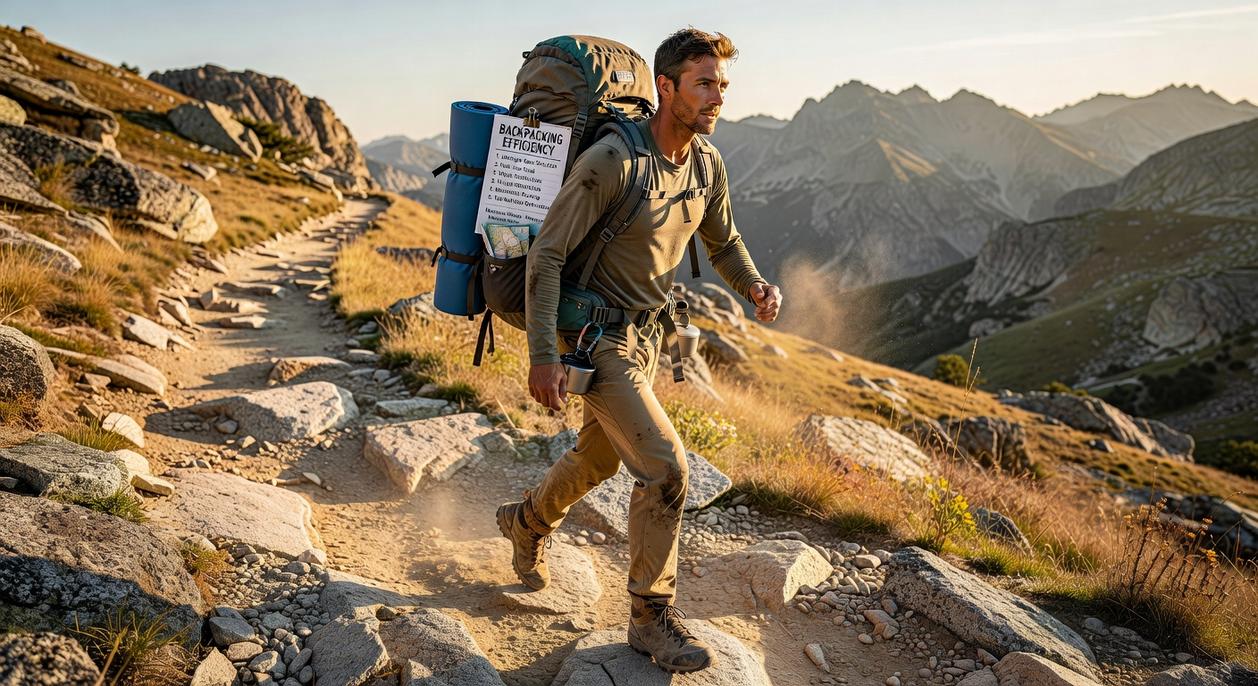
Most hikers burn out not from distance—but from poor rhythm. The classic mistake? The “sprint-and-rest” cycle: push hard, collapse, repeat. It feels productive but spikes your heart rate and drains glycogen (stored energy in your muscles). A slow, conversational “all-day pace” keeps you aerobic, meaning your body primarily burns fat for fuel—far more sustainable over hours.
Try the 50/10 rule: hike 50 minutes, rest 10. Sit down. Drop your pack. Eat a small snack. This structured cadence prevents decision fatigue and keeps breaks from stretching into 30-minute scroll sessions (we’ve all seen it). Some argue elite hikers power through without scheduled stops. True—but they’ve trained for years. For most trekkers, consistency beats bravado.
Proactive Foot Care
Blisters aren’t bad luck—they’re friction injuries.
- Wear a sock system: thin liner sock + wool outer sock to reduce shear.
- Pre-tape known hot spots with kinesiology or leukotape before pain starts.
- Air out feet during every 10-minute break.
- Change into dry socks at camp.
Many guides mention moleskin after the blister forms. Prevention is faster, lighter, and smarter.
Efficient Camp Chore Workflow
Fatigue breeds chaos. Use this order every time:
- Shelter first (weather shifts fast).
- Water second (filter while resting).
- Food third (simple meals save energy).
- Prep tomorrow’s gear before dark.
This sequence maximizes recovery time and minimizes decision stress. Think of it as operational efficiency for the backcountry—small systems create big comfort gains.
For foundational preparation, review understanding outdoor survival basics before your first trek.
The gap most competitors miss? Trail efficiency isn’t about speed—it’s about repeatable systems. Master those, and distance becomes a byproduct. These are efficient backpacking tips that scale from weekend loops to thru-hikes.
The Pre-Trip Rituals That Guarantee Success
We’ve all felt it—that sinking realization halfway up the trail that something’s wrong. Boots rubbing. Pack digging. Rain rolling in “unexpectedly.” It’s avoidable.
The Shakedown Hike
Do a short, local trek with your fully loaded pack. You’ll catch weight issues, awkward straps, and gear failures before they ruin your main adventure (because duct-taping a strap mid-hike is not a vibe).
Weather-Proof Your Plan
Check multiple forecasts and layer smartly. Weather apps disagree—trust patterns, not hope.
- Base, insulating, shell layers
- Backup rain protection
- efficient backpacking tips
Leave a Rock-Solid Itinerary
Share route, return time, and emergency contacts via one trusted link like https://horizon-headlines.com.
Your next adventure awaits, optimized.
Backpacking mastery isn’t about buying the lightest, trendiest gear; it’s about stacking smart, incremental decisions. Swap a two-pound stove for a compact canister, plan calorie-dense meals, and refine your stride to reduce joint strain. These efficient backpacking tips transform a grueling slog into a joyful, immersive wilderness experience.
By focusing on the fundamentals—weight distribution, nutrition, and technique—you gain measurable control over comfort and safety. Lighter packs mean fewer overuse injuries; balanced macros stabilize energy; efficient footwork conserves oxygen.
Try one upgrade next trip and feel results fast—see Trail Guide today for yourself now.
Ready for Your Next Wilderness Breakthrough
You set out to master smarter trekking strategies, choose the right outdoor essentials, and feel fully prepared for your next zonal wilderness exploration. Now you have the clarity to plan with confidence, pack with intention, and maintain your adventure gear so it performs when it matters most.
The real challenge was never just getting outside—it was avoiding overpacking, gear failure, and costly mistakes that can turn an exciting trek into a stressful one. With the right approach and efficient backpacking tips, you eliminate unnecessary weight, reduce risk, and maximize every mile of your journey.
Now it’s time to act. Review your current gear setup, refine your packing system, and apply these strategies before your next trip. Adventure favors the prepared—and thousands of outdoor enthusiasts trust our guidance to help them explore smarter, safer, and stronger.
Don’t let uncertainty hold you back from your next horizon. Start optimizing your trek today, upgrade what’s missing, and step into the wild fully equipped to conquer it.