If you’re planning a trek and trying to dial in your pack weight, you’re likely searching for a clear, practical guide to backpack base weight calculation—without the fluff. Understanding your base weight is one of the most important steps in building a lighter, more efficient kit. It directly impacts your stamina, comfort, and overall safety on the trail.
This article breaks down exactly what counts toward your base weight, what doesn’t, and how to calculate it accurately. You’ll also learn how to evaluate your current gear, identify weight-saving opportunities, and make smarter packing decisions for different environments and trip lengths.
Our guidance draws from field-tested trekking strategies, real-world wilderness scenarios, and proven gear optimization methods. Whether you’re preparing for a weekend hike or a multi-day backcountry expedition, this guide will help you calculate your base weight with confidence—and use that number to build a more capable, trail-ready setup.
Most hikers don’t fail because of steep climbs; they fail because their pack is too heavy. I’ve watched strong, fit friends limp into camp, exhausted, simply because they guessed at their load. That’s why I swear by a precise backpack base weight calculation.
Here’s my no-nonsense approach:
- Start with essential gear only—shelter, sleep system, water, safety.
- Weigh everything individually; assumptions are liars.
- Cut duplicates and “just in case” items.
Some argue extra gear equals safety. I disagree. Smart planning, not fear, keeps you safe. (Your knees will thank you.) Keep it lean, test locally, then adjust before bigger treks accordingly.
Base Weight vs. Total Pack Weight: The Critical Distinction
If you want to hike smarter (and hurt less on day three), you need to understand Base Weight and Total Pack Weight—because they are not the same thing.
Base Weight is the weight of your backpack and all permanent gear before adding consumables like food, water, and fuel. Think shelter, sleep system, clothing, stove, first-aid kit. It’s your constant. This is the number you can control most. Lighter tent? Lower base weight. Swap to a down quilt? Lower base weight.
Total Pack Weight—sometimes called Skin-Out Weight—is everything you’re carrying when you step onto the trail, including snacks, water, and fuel. If you’re hauling four liters of water through the desert, your total weight jumps fast (gravity does not negotiate).
Some hikers argue total weight matters more because it’s what you physically carry. Fair point. But focusing on base weight first creates a standardized system. Once you dial it in using backpack base weight calculation, you can scale food and water up or down depending on trip length.
Pro tip: Weigh every item individually with a digital scale—guesses add up.
Master your base weight, and you’ll trek more efficiently—less Frodo under Mordor’s load, more confident explorer covering miles with energy to spare.
The “Big Three”: Your Pack, Shelter, and Sleep System
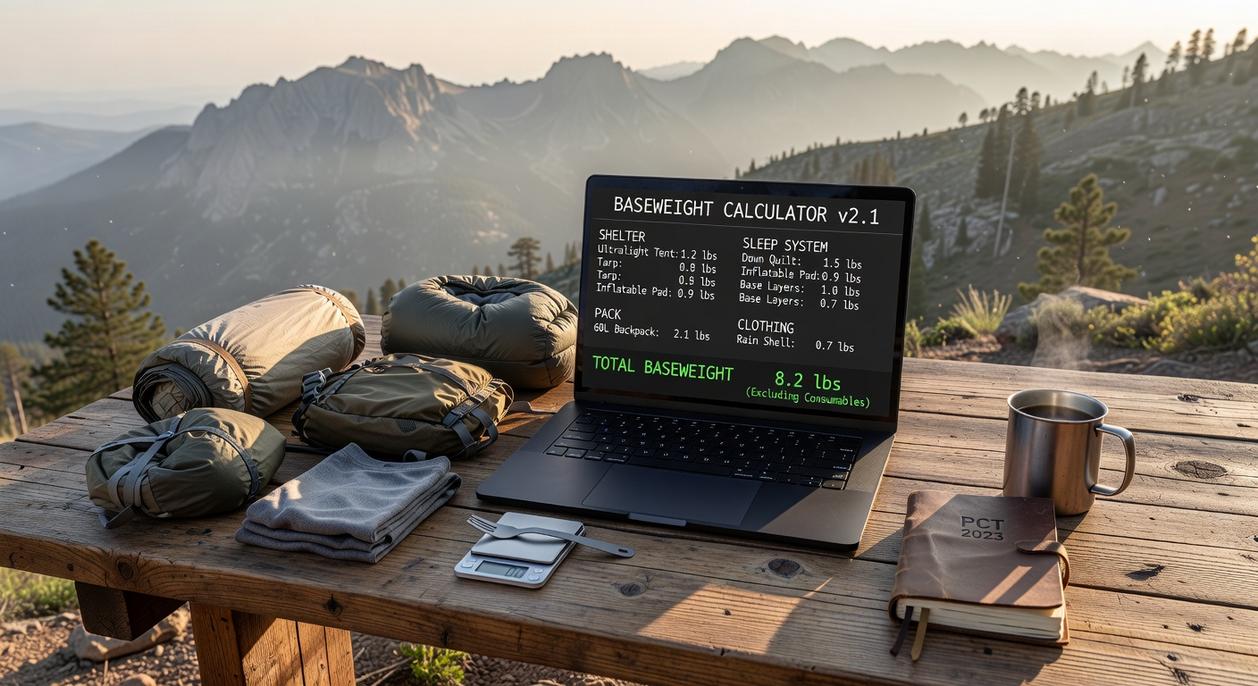
If you want to cut pack weight fast, start with the Big Three: your backpack, your shelter (tent, tarp, or hammock), and your sleep system (sleeping bag or quilt plus pad). Together, these typically make up 40–60% of your total base weight—that is, the weight of your gear excluding food, water, and fuel.
Most hikers underestimate how much these three dominate their loadout. Traditional setups often exceed 10 pounds combined. Lightweight kits fall between 5–9 pounds, while ultralight systems drop below 5 pounds. That difference isn’t just numerical—it directly affects comfort, endurance, and even your pace over rugged terrain (yes, your knees notice).
Here’s the actionable step: perform a backpack base weight calculation and weigh these three items together first. This single number becomes your foundation. From there, you can see where the biggest savings live.
Some argue shaving pounds is unnecessary unless you’re thru-hiking. Fair point. However, even weekend trekkers benefit from reduced fatigue and improved stability—especially when considering what makes a trail difficult breaking down terrain ratings.
Crucially, a lighter Big Three may allow you to choose a less structured, lighter backpack. In other words, reducing weight compounds your gains. Pro tip: upgrade strategically—start with the heaviest item, not the most expensive.
A Systematic Approach to Weighing Everything Else
There’s a saying in backpacking circles: ounces make pounds. It sounds obvious. It’s also wildly underestimated.
Most hikers obsess over the “big three” (pack, shelter, sleep system) and assume the rest is negligible. That’s the popular opinion. I disagree.
The real weight creep hides in the tiny things: the extra carabiner, the longer charging cable, the “just in case” multitool. Individually harmless. Collectively? A brick.
Use a Digital Kitchen Scale
If you’re serious, weigh everything. A digital kitchen scale (accurate to at least 1 gram) is your truth serum. Manufacturer specs are often optimistic, sometimes including no stuff sacks, no batteries, and no fuel. Real-world weight is what matters. (Pro tip: weigh items exactly as you’ll carry them—batteries installed, stuff sacks included.)
Create a Gear Spreadsheet
This is where discipline beats guesswork. Build a spreadsheet with columns for:
- Item
- Category (Cook System, Clothing, Safety, Hygiene, Electronics, Luxury)
- Weight (grams or ounces)
Now you’re not “packing by feel.” You’re running a backpack base weight calculation with data.
Categorize by Systems
Break gear into functional systems:
- Cook system: stove, pot, fuel, utensils
- Clothing: packed vs. worn
- Safety/first-aid
- Hygiene
- Electronics
- Luxury items
Here’s the contrarian take: luxury items aren’t the enemy. Unexamined luxury items are. If a 90-gram paperback keeps morale high after a brutal climb, it may be worth more than a lighter spoon.
Your spreadsheet becomes a living gear database. Swap one item, and you instantly see the impact. That’s how ounces stop quietly becoming pounds.
Calculating Consumables for Your Specific Adventure
Once your base weight is set, you can dial in consumables with precision. After all, what’s the point of a meticulous backpack base weight calculation if you guess the rest?
Start with food. A common benchmark is 1.5 to 2.5 pounds (700–1100 grams) per person per day, depending on caloric density and exertion. Hiking steep alpine passes? You’ll burn more. Leisurely forest trekking? Maybe less. Multiply by your trip length—and be honest about your appetite (trail hunger is real).
Next, consider water. Remember: a liter is a kilo (2.2 lbs). So, how far apart are reliable sources on your route? Carrying four liters “just in case” sounds safe—but is it necessary?
Finally, estimate fuel:
- Count planned boils for meals and drinks
- Check your stove’s burn rate
- Add a small buffer for wind or cold
In short, calculate for your route, not someone else’s adventure. Sound familiar?
Your Blueprint for a Lighter, More Enjoyable Journey
You now have a complete, systematic process for determining your pack’s initial weight without guesswork.
Start with your backpack base weight calculation, then scrutinize the Big Three: shelter, sleep system, and pack. Next, log every item in a spreadsheet and challenge its purpose. Finally, add consumables based on distance and climate.
This method may feel meticulous, but precision prevents misery on the trail. Some argue instinct is enough; however, data-driven packing consistently reduces fatigue and injury risk (your knees will thank you).
Before your next zonal wilderness exploration, apply this blueprint ruthlessly.
You set out to simplify your trekking setup, reduce unnecessary strain, and feel more confident on the trail. Now you understand how every item in your pack affects performance, endurance, and overall wilderness safety. By mastering your backpack base weight calculation, you’re no longer guessing—you’re making intentional, informed decisions that directly improve your outdoor experience.
Too many adventurers hit the trail overloaded, fatigued, and frustrated before the real journey even begins. Extra weight drains energy, slows progress, and increases injury risk. Dialing in your base weight solves that problem at its core.
Understanding the difference between base weight and total pack load can significantly enhance your outdoor experience, just as knowing how to properly care for your gear—like the techniques outlined in our article on washing and reproofing outdoor clothing—can extend the life of your equipment on the trails – for more details, check out our Caring for Outdoor Clothing: Washing and Reproofing Explained.
Take Control of Your Next Trek
Now it’s time to act. Reassess your current gear list, calculate your base weight, and identify what can be trimmed or upgraded. If you’re serious about hiking lighter, moving farther, and exploring smarter, start optimizing today. Join thousands of outdoor enthusiasts who trust our expert-backed trekking strategies and gear insights to hike stronger and safer. Don’t let excess weight hold you back—refine your setup and hit the trail with confidence.